
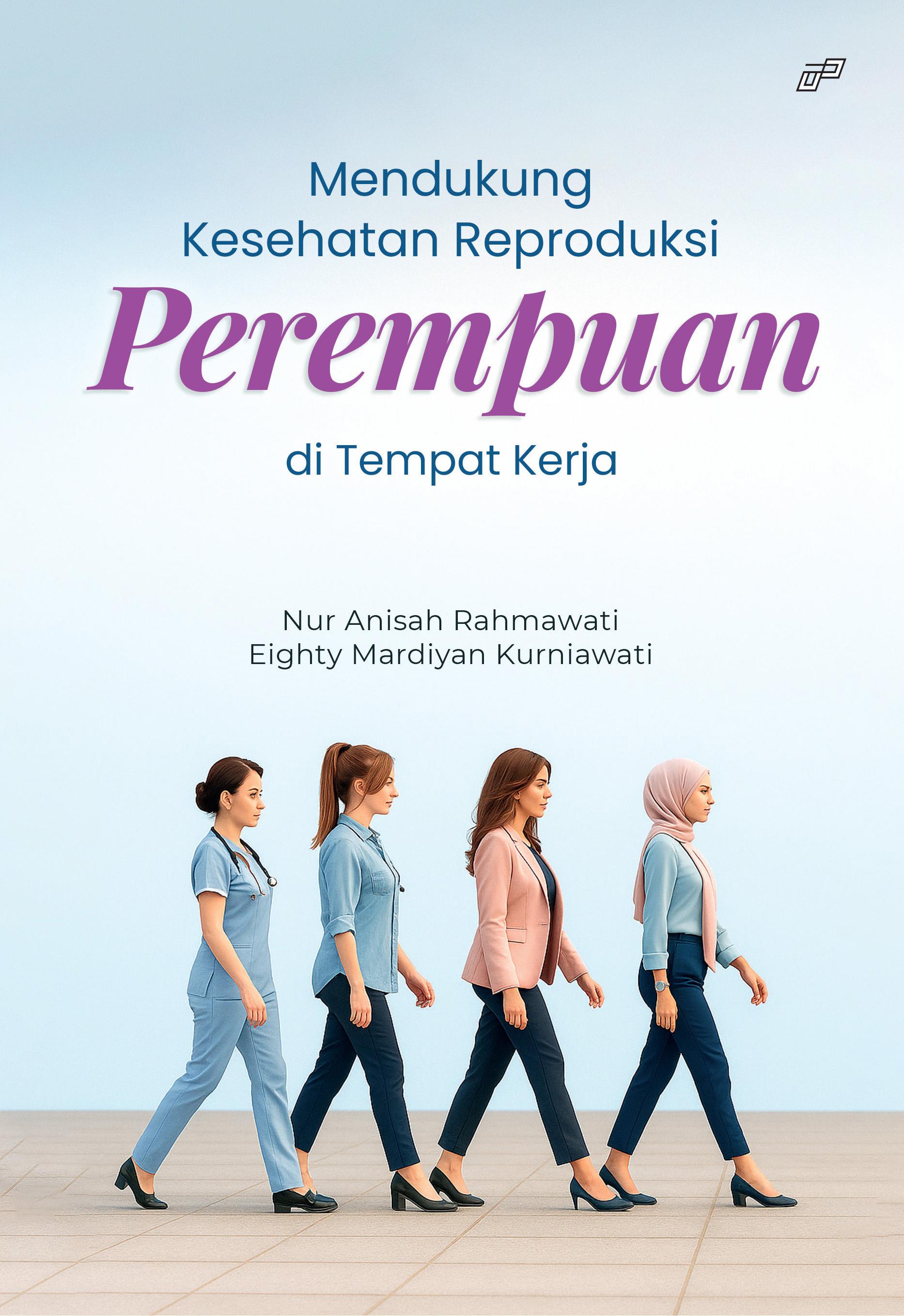
Mendukung Kesehatan Reproduksi Perempuan di Tempat Kerja
Keywords:
kesehatan, reproduksi, perempuan, workplace wellness, pekerja perempuanSynopsis
Biologi perempuan dapat dilihat lebih kompleks secara alami daripada biologi laki-laki karena variasi normal atau perubahan dan disposisi untuk berbagai penyakit, yang mungkin memengaruhi partisipasi kehidupan kerja. Kondisi dari ketiga bidang kesehatan perempuan yang diidentifikasi — tahap kehidupan dampak hormonal, kehamilan dan reproduksi serta gangguan kronis dan kompleks — ditemukan memengaruhi ketidakhadiran penyakit dan kemampuan kerja. Situasi yang kompleks yang dialami perempuan ini akan dibahas dalam buku ini termasuk bagaimana pekerjaan dan aktivitas kerja perempuan ternyata berdampak pada kesehatan reproduksinya.
Buku ini diharapkan dapat memenuhi kebutuhan untuk mendukung kesehatan reproduksi perempuan di tempat kerja dengan mencegah risiko yang terjadi dengan berbagai pertimbangan dan kebijakan. Buku ini dapat mendukung mahasiswa, dosen, teman sebaya dan praktisi kesehatan dalam memberikan pelayanan bagi perempuan yang bekerja terkait kesehatan reproduksinya. Buku ini juga merupakan bentuk aplikasi pemanfaatan ilmiah dari staf pengajar dan mahasiswa Fakultas Kedokteran Universitas Airlangga
Downloads
Download data is not yet available.
References
Rowson, T.S. and Jones, R.J. (2023) ‘Understanding the Subjective Experience of Menopause at Work: A Systematic Review and Conceptual Model’, Journal of Constructivist Psychology, pp. 1–20. Available at: https://doi.org/10.1080/10720537.2025.2465611.
Roy, A. and Matzuk, M.M. (2011) ‘Reproductive tract function and dysfunction in women’, Nature Reviews Endocrinology, 7(9), pp. 517–525. Available at: https://doi.org/10.1038/nrendo.2011.79.
Rugvedh, P., Gundreddy, P. and Wandile, B. (2023) ‘The Menstrual Cycle’s Influence on Sleep Duration and Cardiovascular Health: A Comprehensive Review’, Cureus, 15(10). Available at: https://doi.org/10.7759/cureus.47292.
Rumeng, C. et al. (2023a) ‘Work-Related Factors Associated With the Pelvic Floor Dysfunction Among a Sample of Female Nurses in China’, Workplace Health and Safety, 71(6), pp. 282–295. Available at: https://doi.org/10.1177/21650799231154282.
Rumeng, C. et al. (2023b) ‘Work-Related Factors Associated With the Pelvic Floor Dysfunction Among a Sample of Female Nurses in China’, Workplace Health & Safety, 71(6), pp. 282–295. Available at: https://doi.org/10.1177/21650799231154282.
Safwan, N. et al. (2024) ‘Menopause in the workplace: Challenges, impact, and next steps’, Maturitas, 185, p. 107983. Available at: https://doi.org/https://doi.org/10.1016/j.maturitas.2024.107983.
Sahni, S., Kaushal, L.A. and Gupta, P. (2025) ‘Gendered differences and strategies for work-life balance: Systematic review based on social ecological framework perspective’, Acta Psychologica, 256, p. 105019. Available at: https://doi.org/https://doi.org/10.1016/j.actpsy.2025.105019.
Salihu, H.M., Myers, J. and August, E.M. (2012) ‘Pregnancy in the workplace’, Occupational Medicine, 62(2), pp. 88–97. Available at: https://doi.org/10.1093/occmed/kqr198.
BISAC
- HEA024000 Health & Fitness / Women's Health
- BUS097000 Business & Economics / Workplace Culture
- BUS030000 Business & Economics / Human Resources & Personnel Management
Published
December 8, 2025
Series
Copyright (c) 2025 Airlangga University Press
License

This work is licensed under a Creative Commons Attribution-NonCommercial-ShareAlike 4.0 International License.
Details about the available publication format: Preview
Preview