
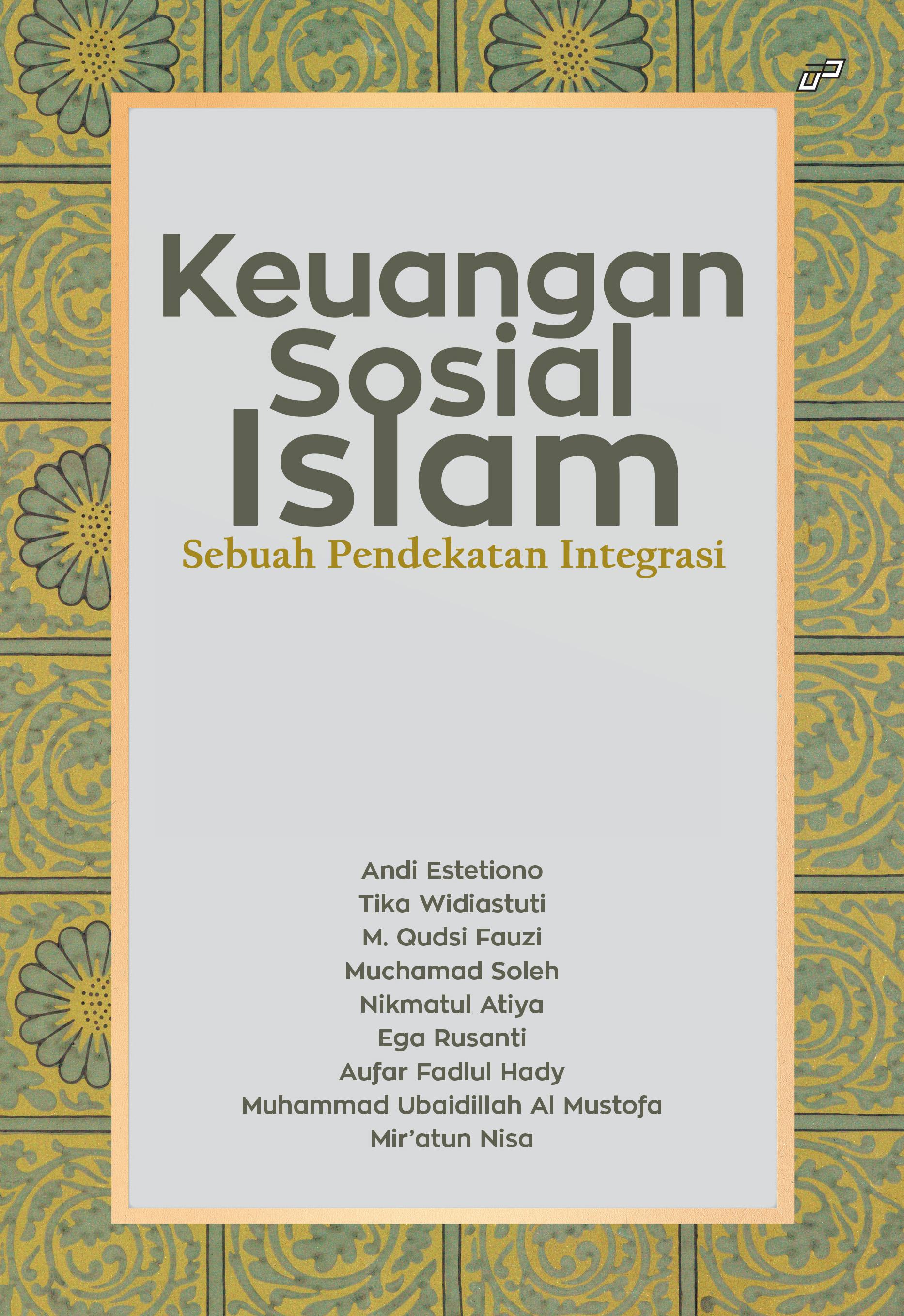
Keuangan Sosial Islam: Sebuah Pendekatan Integrasi
Keywords:
Keuangan Sosial Islam, Integrasi, Ekonomi, Sosial, KesejahteraanSynopsis
Keuangan Sosial Islam: Sebuah Pendekatan Integrasi mengkaji secara mendalam konsep Islamic Social Finance (ISF) sebagai instrumen strategis dalam mewujudkan kesejahteraan sosial dan keadilan ekonomi. Buku ini menyoroti pentingnya integrasi berbagai instrumen keuangan sosial Islam, yaitu zakat, infak/sedekah, wakaf, dan Islamic microfinance, sebagai upaya untuk meningkatkan efektivitas dan efisiensi pengelolaan dana sosial di Indonesia.
Melalui pendekatan integratif, buku ini menjelaskan bagaimana sinergi antarinstrumen tersebut dapat menghasilkan solusi yang lebih komprehensif dalam mengatasi berbagai permasalahan sosial dan ekonomi, seperti kemiskinan, ketimpangan, dan keterbatasan akses pembiayaan bagi masyarakat. Tidak hanya membahas konsep teoritis, buku ini juga menguraikan potensi implementasi dan dampak nyata dari model integrasi ISF dalam mendukung pembangunan yang berkelanjutan dan inklusif.
Buku ini ditujukan bagi akademisi, praktisi, pembuat kebijakan, serta masyarakat yang memiliki minat terhadap ekonomi Islam. Dengan penyajian yang sistematis dan reflektif, buku ini diharapkan dapat menjadi referensi penting sekaligus mendorong kolaborasi lintas pemangku kepentingan dalam membangun sistem keuangan yang lebih adil dan berorientasi pada kesejahteraan bersama.
Downloads
Download data is not yet available.
References
Abdullah, M. (2018). Waqf, Sustainable Development Goals (SDGs) and maqasid al-shariah. International Journal of Social Economics, 45(1), 158–172.
Abubakar, Jamila and Aysan, Ahmet. (2021). Research trends in the field of Islamic social finance. http://dx.doi.org/10.2139/ssrn.3917822
Afriadi, F., & Sanrego, yulizar d. (2016). Mengurai Permasalahan Distribusi Zakat Kepada Fakir Miskin: Pengalaman Organisasi Pengelola Zakat Baznaz, Dompet Dhuafa, Dan Lazizmu. Jurnal Madania, 20(1), 23–36. https://doi.org/10.29300/madania.v20i1.83
Aggarwal, R.K. and Yousef, T. (2000). Islamic banks and investment financing. Journal of Money, Credit and Banking, Vol. 32 No. 1, p. 93
Ahmad, M. (2019). An Empirical Study of The Challenges Facing Zakat and Waqf Institutions in Northern Nigeria. ISRA International Journal of Islamic Finance, 11(2), 338–356. https://doi.org/10.1108/IJIF-04-2018-0044
Ahmed, Bilqis Ololade, Fuadah Johari, and Kalsom Abdul Wahab, (2017). ‘Identifying the Poor and the Needy among the Beneficiaries of Zakat’, International Journal of Social Economics, 44.4 446–58 <https://doi.org/10.1108/IJSE-09-2015-0234>
Ahmed, Bilqis Ololade, Fuadah Johari, and Kalsom Abdul Wahab. (2017). ‘Identifying the Poor and the Needy among the Beneficiaries of Zakat’, International Journal of Social Economics, 44.4 (446–58 <https://doi.org/10.1108/IJSE-09-2015-0234>
Ahmed, H. (2007). Waqf-based microfinance: realizing the social role of Islamic finance. Integrating Awqaf in the Islamic Financial Sector, World Bank
Ali, R. (2015). The Holy-Quran, Arabic Text and English Translation. Islam International publications Limited.
Amuda, Y.J. (2013), “Empowerment of Nigerian Muslim Households through Waqf, Zakat, Sadaqat and Public Funding”, International Journal of Trade, Economics and Finance, Vol. 4 No. 6, pp. 419–424. Dan Haneef, M.A., Pramanik, A.H., Mohammed, M.O., Bin Amin, M.F. and Muhammad, A.D. (2015), “Integration of Waqf-Islamic Microfinance Model for Poverty Reduction: The Case of Bangladesh”, International Journal of Islamic and Middle Eastern Finance and Management, Vol. 8 No. 2, pp. 246–270
Arumsari, Vita, and Rikawati Rikawati. (2020). ‘Islamic Social Funds: Enabling the Unable To Be Able’, Journal of Applied Business Administration, 4.1. 88–97 <https://doi.org/10.30871/jaba.v4i1.1902>
Arwani, A. (2020). Sharia Accounting on Indonesian Financial Accounting Standard on Zakat and Waqf Take on Industrial Revolution 4.0 and Society Era 5.0. Journal of Islamic Accounting and Finance Research, 2(2), 229–258. https://doi.org/10.21580/jiafr.2020.2.2.6295
Ascarya, A. (2021), “The role of Islamic social finance during Covid-19 pandemic in Indonesia’s economic recovery”, International Journal of Islamic and Middle Eastern Finance and Management, Emerald Group Holdings Ltd., available at:https://doi.org/10.1108/IMEFM-07-2020-0351
Azganin, H., Kassim, S., & Auwal Adam, S. (2021). Proposed waqf crowdfunding models for small farmers and the required parameters for their application. Islamic Economic Studies. https://doi.org/10.1108/IES-01-2021-0006
Badan Wakaf Indonesia. (2019). Buku Pintar Wakaf. Badan Wakaf Indonesia.
Balassa, Bela, ‘Types of Economic Integration’, International Economic Association Series, 1974, 17–40
Bank Indonesia. (2021). "Laporan Ekonomi dan Keuangan Syariah 2019 - Bank Indonesia." 9 Apr. 2021, https://www.bi.go.id/id/publikasi/ruang-media/news-release/Pages/Laporan-Ekonomi-dan-Keuangan-Syariah-2019-Ekonomi-Syariah-Dukung-Pemulihan-Ekonomi-Dampak-COVID-19.aspx. Accessed 15 Dec. 2021.
BAZNAS. (2023). ‘Outlook Zakat Indonesia 2023’, Pusat Kajian Strategis - Badan Amil Zakat Nasional (PUSKAS BAZNAS).
BAZNAS. (2016) ‘Core Principles for Effective Zakat Supervision’, Badan Amil Zakat Nasional, May, 40.
BAZNAS. (2021). "Indikator Pemetaan Potensi Zakat (IPPZ) - Puskas BAZNAS." https://www.puskasbaznas.com/publications/books/976-indikator-pemetaan-potensi-zakat-ippz. Accessed 16 Dec. 2021.
BAZNAS. (2021). Outlook Zakat Indonesia 2021. Pusat Kajian Strategis - Badan Amil Zakat Nasional (PUSKAS BAZNAS).
Beik, I. S. (2015). Towards International Standardization of Zakat System. Fiqh Zakat International Conference 2015, November, 3–17. https://doi.org/10.13140/RG.2.1.4490.1207
Beik, I. S. (2021). Konsolidasi Zakat dan Wakaf Dunia. Republika. https://www.republika.id/posts/23537/konsolidasi-zakat-dan-wakaf-dunia
Beik, I. S. (2021). Memperkuat Kolaborasi Zakat dan Wakaf. BWI. https://www.bwi.go.id/6928/2021/05/27/memperkuat-kolaborasi-zakat-dan-wakaf/
Belkacem, M. (2015). “The role of Islamic banks in the establishment of social responsibility within Islamic countries”, Journal of Emerging Issues in Economics, Finance and Banking (JEIEFB) an Online International Research Journal, Vol. 4 No. 1, pp. 1377-1384
Berakon, I., Aji, H. M., & Hafizi, M. R. (2021). Impact of Digital Sharia Banking Systems on Cash-Waqf among Indonesian Muslim Youth. Journal of Islamic Marketing. https://doi.org/10.1108/JIMA-11-2020-0337
Bong, A., & Premaratne, G. (2019). The impact of financial integration on economic growth in Southeast Asia. The Journal of Asian Finance, Economics and Business, 6(1), 107-119.
Budianto, A., & Fanani, S. (2021). DAMPAK WAKAF PRODUKTIF DALAM PEMBANGUNAN INFRASTRUKTUR GRIYA KHADIJAH PUSPAS UNAIR. Jurnal Ekonomi Syariah Teori Dan Terapan, 8(2).
Budiman, A. A. (2011). Akuntabilitas Lembaga Pengelola Wakaf. Walisongo, 19(1), 75–102.
Cahyono, E. F., & Hidayat, S. E. (2021). Cash Waqf and the Development : A Case Study of Cash Waqf Linked Sukuk in Indonesia. International Conference on Islamic Finance 2021.
Cao, Moyuan, and Lei Jiang, ‘Superwettability Integration: Concepts, Design and Applications’, Surface Innovations, 4.4 (2016), 180–94 <https://doi.org/10.1680/jsuin.16.00004>
Caraka, R. E., Lee, Y., Kurniawan, R., Herliansyah, R., Kaban, P. A., Nasution, B. I., Gio, P. U., Chen, R. C., Toharudin, T., & Pardamean, B. (2020). Impact of COVID-19 large scale restriction on environment and economy in Indonesia. Global Journal of Environmental Science and Management, 6(Special Issue), 65–84. https://doi.org/10.22034/GJESM.2019.06.SI.07
COSO, Enterprise Risk Management: Understanding the New Integrated Erm Framework, Internal Auditing, 2004
Egli, Florian, ‘Renewable Energy Investment Risk: An Investigation of Changes over Time and the Underlying Drivers’, Energy Policy, 140 (2020), 111428 <https://doi.org/10.1016/j.enpol.2020.111428>
Fahruroji, F., & Arifin, J. (2015). Pengembangan Harta Wakaf Di Singapura. Equilibrium: Jurnal Ekonomi Syariah, 3(1), 104-125. doi:http://dx.doi.org/10.21043/equilibrium.v3i1.1274
Global Islamic Finance (2017). Overview of the Global Islamic Finance Industry, Global Islamic Finance
Gough, David, and Margaret A. Lynch, ‘ISO Guide: Managing Risk’, UNECE GRM, 9.4 (2000), 229–31 <https://doi.org/10.1002/1099-0852(200007/08)9:4<229::AID-CAR644>3.0.CO;2-Y>
Hamed, M. M. (2020). The Role of Islamic Social Finance in Mitigating Humanitarian Crises; A Multi-Range Strategy to Mitigate COVID-19 Impacts. European Journal of Islamic Finance, 0(16), 1–10. https://doi.org/10.13135/2421-2172/4937
Haneef, Mohamed Aslam, Pramanik, A. H., Mohammed, M. O., Bin Amin, M. F., & Muhammad, A. D. (2015). Integration of Waqf-Islamic Microfinance Model for Poverty Reduction: The Case of Bangladesh. International Journal of Islamic and Middle Eastern Finance and Management, 8(2), 246–270. https://doi.org/10.1108/IMEFM-03-2014-0029
Hassanain, K. M. (2015). Integrating Zakah, Awqaf and IMF for poverty alleviation: Three models of Islamıc micro finance. Journal of Economic and Social Thought, 2(3), 193-211.
Hidayatullah, A., & Priantina, A. (2018). Toward Zakat Management Integration in Indonesia: Problems and Solution. Ahkam: Jurnal Ilmu Syariah, 18(2), 321–346. https://doi.org/10.15408/ajis.v18i2.6319
Huda, M. (2013). Model Manajemen Fundraising Wakaf. AHKAM : Jurnal Ilmu Syariah, 13(1), 31–38. https://doi.org/10.15408/ajis.v13i1.948
Hudaefi, F. A., Caraka, R. E., & Wahid, H. (2021). Zakat Administration in Times of COVID-19 Pandemic in Indonesia: A Knowledge Discovery via Text Mining. International Journal of Islamic and Middle Eastern Finance and Management. https://doi.org/10.1108/IMEFM-05-2020-0250
Hudaefi, Fahmi Ali. (2020). ‘How Does Islamic Fintech Promote the SDGs? Qualitative Evidence from Indonesia’, Qualitative Research in Financial Markets, 12.4. 353–66 <https://doi.org/10.1108/QRFM-05-2019-0058>
Husain, Kamil. (2021). ‘Contribution of Zakat and Community Economic Welfare’, Indonesian Journal of Social Science Research, 2.1 39–43 <https://doi.org/10.11594/ijssr.02.01.06>
Idwal, B. (2014). Sejarah Perkembangan Lembaga Keuangan Syari’ah. Jurnal Ilmiah Mizani: Wacana Hukum, Ekonomi, dan Keagamaan, 1(1).
IRTI. (2014). Islamic Social Finance Report 2014. In Islam and the Moral Economy. https://doi.org/10.1017/cbo9780511617614.005
Islamic Research and Training Institute (2020). Islamic Social Finance Report 2020. Islamic Development Bank Institute.
Islamic Research and Training Institute (2020). Keuangan Sosial Islam Report 2020. Islamic Development Bank Institute.
Jajuli, S. (2018). Kebijakan Fiskal dalam Perspektif Islam (Baitul maal sebagai Basis Pertama dalam Pendapatan Islam). Ad-Deenar: Jurnal Ekonomi dan Bisnis Islam, 1(01), 8-25.
Kahn, Kenneth B., and John T. Mentzer, ‘Marketing’s Integration with Other Departments’, Journal of Business Research, 42.1 (1998), 53–62 <https://doi.org/10.1016/S0148-2963(97)00068-4>
Kamaruddin, Muhammad Iqmal Hisham, Sofiah Md Auzair, Mohd Mohid Rahmat, and Nurul Aini Muhamed, ‘The Mediating Role of Financial Governance on the Relationship between Financial Management, Islamic Work Ethic and Accountability in Islamic Social Enterprise (ISE)’, Social Enterprise Journal, 17.3 (2021), 427–49 <https://doi.org/10.1108/SEJ-11-2020-0113>
Kasdi, A. (2016). Peran Nadzir Dalam Pengembangan Wakaf. ZISWAF: Jurnal Zakat Dan Wakaf, 1(2), 1–14.
KBBI. (2009) ‘Kamus Besar Bahasa Indonesia’, Http://Kbbi.Web.Id/Pusat, 2009.
Kementerian Agama. (2012). Buku Panduan Organisasi Pengelola Zakat, Kementerian Agama
Kementerian Agama. (2015) ‘Modul Aplikasi Sistem Informasi Wakaf’, Kementerian Agama Republik Indonesia.
Khan, A., Hassan, M.K., Paltrinieri, A., Dreassi, A. and Bahoo, S. (2020). A bibliometric review of takaful literature. International Review of Economics and Finance
Klapper, L., El-Zoghbi, M., & Hess, J. (2016). Achieving the Sustainable Development Goals: The Role of Financial Inclusion. Working paper of United Nations Secretary-General’s Special Advocate for Inclusive Finance for Development.
KNEKS. (2019). Strategi Pengembangan Keuangan Mikro Syariah Di Indonesia (I). KNEKS
KNKS. (2019). Strategi Pengembangan Keuangan Mikro Syariah di Indonesia. KNKS.
Kountur, Ronny, and Martdian Ratna Sari, ‘Risk Identification Approaches and the Number of Risks Identified: The Use of Work Breakdown Structure and Business Process’, Humanities and Social Sciences Communications, 10.1 (2023), 1–7 <https://doi.org/10.1057/s41599-023-02028-8>
Kuanova, et al. (2021). Islamic Social Finance: a literature review and future research directions. Journal of Islamic Accounting and Business Research. DOI 10.1108/JIABR-11-2020-0356
Kuanova, L.A., Sagiyeva, R. and Shirazi, N.S. (2021). "Islamic social finance: a literature review and future research directions", Journal of Islamic Accounting and Business Research, Vol. 12 No. 5, pp. 707-728. https://doi.org/10.1108/JIABR-11-2020-0356
Latifah, N. A., & Jamal, M. (2019). Analisis Pelaksanaan Wakaf di Kuwait. ZISWAF : Jurnal Zakat Dan Wakaf, 6(1), 1–18. https://doi.org/10.21043/ziswaf.v1i1.5607 dan Badan Wakaf Indonesia. (2019). Buku Pintar Wakaf. Badan Wakaf Indonesia.
Lord, P. (2018). Ending Poverty. SSRN Electronic Journal. doi: 10.2139/ssrn.3297397.
Mahomed, Z. (2017). Islamic Social Finance: Relevance and Recognition with Responsibility. Islamic Finance Hub. DOI 10.1108/JIABR-11-2020-0356
Mashuri, M. (2016). Peran Baitul Maal Wa Tamwil (BMT) Dalam Upaya Pemberdayaan Ekonomi Masyarakat. IQTISHADUNA: Jurnal Ilmiah Ekonomi Kita, 5(2), 114-123.
Moeller, Scott, ‘A Study of How Behavioural Finance Theory Applies to the Senior Management Decision-Making Process in M&A’, SSRN Electronic Journal, 44.February (2022), 1–34 <https://doi.org/10.2139/ssrn.4043808>
Mohammed, O. (2008). “Introduction of Islamic microfinance”, Journal of Social Issues in Southeast Asia
Mohd Nor, S., Abdul-Majid, M., & Esrati, S. N. (2021). The role of blockchain technology in enhancing Islamic social finance: the case of Zakah management in Malaysia. Foresight, 23(5), 509–527. https://doi.org/10.1108/FS-06-2020-0058
Moyer, J.D. and Hedden, S. (2020). Are we on the right path to achieve the sustainable development goals?. World Development. doi: 10.1016/j.worlddev.2019.104749
Muhajir, K. A., & Nawawi, K. H. (2021). Revitalisasi Filantropi Islam Optimalisasi Wakaf Dalam Pemberdayaan Ekonomi Umat. Cv Literasi Nusantara Abadi.
Muhsan. (2013). Wakaf Di Saudi Arabia Dan Mesir (Tinjauan Manajemen Dan Terapan Wakaf Produktif). Al-Majaalis : Jurnal Dirasat Islamiyah, 1(1), 151–168. https://doi.org/10.37397/almajaalis.v1i1.11
Mukhlisin, Murniati & Tamanni, Luqyan & Azid, Toseef & Mustafida, Rifka. (2020). Contribution of Islamic Microfinance Studies in Achieving Sustainable Development Goals. 10.1007/978-3-030-39935-1_4.
Muneeza, A., & Nadwi, S. (2019). The Potential of Application of Technology-Based Innovations for Zakat Administration in India. International Journal of Zakat, 4(2), 87–100. https://doi.org/10.37706/ijaz.v4i2.191
Mustofa, I., Santoso, D., & Rosmalinda, U. (2020). The Implementation of the Regulation of Cash Waqf Management in Higher Educational Institutions in Indonesia and Malaysia (a Study of Legal System Theory). Humanities & Social Sciences Reviews, 8(4), 69–77. https://doi.org/10.18510/hssr.2020.848
Obaidullah, M. (2008). Introduction to Islamic microfinance. Mohammed Obaidullah, Introduction to Islamic Microfinance, IBF Net Limited.
Owoyemi, M.Y. (2020), “Zakat management: the crisis of confidence in zakat agencies and the legality of giving zakat directly to the poor”, Journal of Islamic Accounting and Business Research, Vol. 11 No. 2, pp. 498-510, available at: https://doi.org/10.1108/JIABR-07-2017-0097
Qardawi, Y.A. (1999). Fiqh Al Zakah: A Comparative Study of Zakah, Regulations and Philosophy in the Light of Qur’an and Sunnah. Scientific Publishing Centre King Abdulaziz University, Jeddah.
Rahayu, R. D., & Agustianto, M. A. (2020). Analisis Implementasi Cash Waqf Linked Sukuk (CWLS) Perspektif Prinsip Ekonomi Syariah. Management of Zakat and Waqf Journal (MAZAWA), 1(2), 145–161. https://doi.org/10.15642/mzw.2020.1.2.145-161
Rahmany, Sri. 2019. Wakaf Produktif di Malaysia. IQTISHADUNA: Jurnal Ilmiah Ekonomi Kita Juni 2019, Vol.8, No.1: 43-64
Raissouni, A. (2001). Islamic “Waqf Endowment”: Scope and Implication. ISESCO
Rashid, Md. Harun & Uddin, Mohammed & Zobair, Shah. (2018). Islamic Microfinance and Sustainable Development Goals in Bangladesh. 2. 67-80. 10.46281/ijibm.v2i1.53.
Remy, S. S. (2014). Perbankan Syariah produk-produk dan aspek-aspek hukumnya. Jakarta: Kencana.
Rohmaningtyas, N. (2017). The significance of waqf in historical and theoretical studies. Journal of Islamic Economics Science, 1(1), 39-55.
Rohmaningtyas, N. (2018). Pengumpulan Wakaf Berbasis Pesantren: Studi Kasus di Pondok Modern Darussalam Gontor dan Pondok Modern Tazakka. ADILLA : Jurnal Ekonomi Syariah, 1(1), 1–21.
Rohmaningtyas, N. (2018). Pengumpulan Wakaf Berbasis Pesantren: Studi Kasus di Pondok Modern Darussalam Gontor dan Pondok Modern Tazakka. ADILLA : Jurnal Ekonomi Syariah, 1(1), 1–21.
Rosli, M. R. Bin, Salamon, H. Bin, & Huda, M. (2018). Distribution management of zakat fund: Recommended proposal for asnaf riqab in Malaysia. International Journal of Civil Engineering and Technology
Rusydiana, A. S., Sukmana, R., & Laila, N. (2021). Waqf on Education: A Bibliometric Review based on Scopus. Library Philosophy and Practice (e-Journal).
Saad, R. A. J., Idris, K. M., Shaari, H., Sawandi, N., & Derashid, C. (2017). Governance of non-profit organizations: A case of zakat institutions in Malaysia. International Journal of Economic Research, 14(16), 253–265.
Saad, Ram Al Jaffri, and Abubakar Umar Farouk. (2019). ‘A Comprehensive Review of Barriers to a Functional Zakat System in Nigeria’, International Journal of Ethics and Systems, 35.1 24–42 <https://doi.org/10.1108/IJOES-06-2018-0090>
Sari, A. C. (2018). Pengelolaan Zakat di Negara Sudan. ZISWAF: Jurnal Zakat dan Wakaf, 4(2), 347-364.
Shaikh, S. A., & Ismail, A. G. (2017). Role of zakat in sustainable development goals. International Journal of Zakat, 2(2), 1-9.
Shaikh, S. A., Ismail, A. G., & Shafiai, M. H. M. (2017). Application of waqf for social and development finance. ISRA International Journal of Islamic Finance, 9(1).
Shulthoni, M., & Saad, N. M. (2018). Waqf fundraising management: A conceptual comparison between traditional and modern methods in the waqf institutions. Indonesian Journal of Islam and Muslim Societies, 8(1), 57–86. https://doi.org/10.18326/ijims.v8i1.57-86
Smolo, Edib. (2012). An Overview of Islamic Microfinance.
Soemitra, Andri, and Juliana Nasution, ‘The Influence of Zakat Literacy, Trust, and Ease of Digital Payments on Generation Z and Y Intention in Paying Zakat to Amil Zakat Organizations’, Undonesian Conference of Zakat - Proceedings, 2022, 323–34
Sukmana, R. (2020). Critical assessment of Islamic endowment funds (Waqf) literature: lesson for government and future directions. Heliyon, 6(10). https://doi.org/10.1016/j.heliyon.2020.e05074
Sulistyowati, S. (2018). Designing integrated zakat-waqf models for disaster management. Journal of Islamic Monetary Economics and Finance, 4(2), 347-368.
Susanto, H. (2017, January 3). Eksistensi dan Peran Ekonomis Harta Wakaf. HUNAFA: Jurnal Studia Islamika, 13(2), 316-342. https://doi.org/https://doi.org/10.24239/jsi.v13i2.442.316-342
Susilo, L. J. dan Kaho, V.R. 2018. Manajemen Risiko Berbasis ISO 31000 Untuk Industri Non Perbankan. Jakarta: PPM.
Tahiri Jouti, A. (2019). An integrated approach for building sustainable Islamic social finance ecosystems. ISRA International Journal of Islamic Finance, 11(2), 246-266
Thaker, M. A. M. T., Amin, M. F., Thaker, H. M. T., Khaliq, A., & Pitchay, A. A. (2021). Cash Waqf Model for Micro Enterprises’ Human Capital Development. ISRA International Journal of Islamic Finance, 13(1), 66–83. https://doi.org/10.1108/ijif-08-2018-0091
Undang-Undang No. 41 Tahun 2004 tentang Wakaf, (2004).
Usman, H., Mulia, D., Chairy, C., & Widowati, N. (2020). Integrating Trust, religiosity and image into technology acceptance model: the case of the Islamic philanthropy in Indonesia. Journal of Islamic Marketing. https://doi.org/10.1108/JIMA-01-2020-0020
Usman, Tasmin, R., Ulum, Z. K. A. B., and A. A. Abubakar. (2017). ‘The Role of Islamic Micro-Finance in Enhancing the Wellbeing of the Clients: Exploratory Factor Analysis’, Journal on Innovation and Sustainability. RISUS ISSN 2179-3565, 8.3, 94 <https://doi.org/10.24212/2179-3565.2017v8i3p94-107>
Widiastuti, T., Auwalin, I., Rani, L. N., & Mustofa, M. U. Al. (2021). A Mediating Effect of Business Growth on Zakat Empowerment Program and Mustahiq’s Welfare. Cogent Business and Management, 8(1), 1882039. https://doi.org/10.1080/23311975.2021.1882039
Widiastuti, Tika, Sri Ningsih, Ari Prasetyo, Imron Mawardi, Sri Herianingrum, Anidah Robani, and others, ‘Developing an Integrated Model of Islamic Social Finance: Toward an Effective Governance Framework’, Heliyon, 8.9 (2022), e10383 <https://doi.org/10.1016/j.heliyon.2022.e10383>
Zaenab, R. (2019). Pengelolaan Wakaf Di Singapura. Jurnal Pikir : Jurnal Studi Pendidikan Dan Hukum Islam, 5(1), 1-17. Retrieved from http://ejournal.staida-krempyang.ac.id/index.php/pikir/article/view/326
Zarka, M.A. and Shirazi, N.S. (2017). Social tax and transfers for poverty alleviation: a case for lowand middle- income countries. Handbook of Empirical Research on Islam and Economic Life
BISAC
- POL023000 Political Science / Political Economy
- BUS001000 Business & Economics / Accounting / General
Published
April 9, 2026
Series
Categories
Copyright (c) 2026 Airlangga University Press
License

This work is licensed under a Creative Commons Attribution-NonCommercial-ShareAlike 4.0 International License.
Details about the available publication format: Preview
Preview