
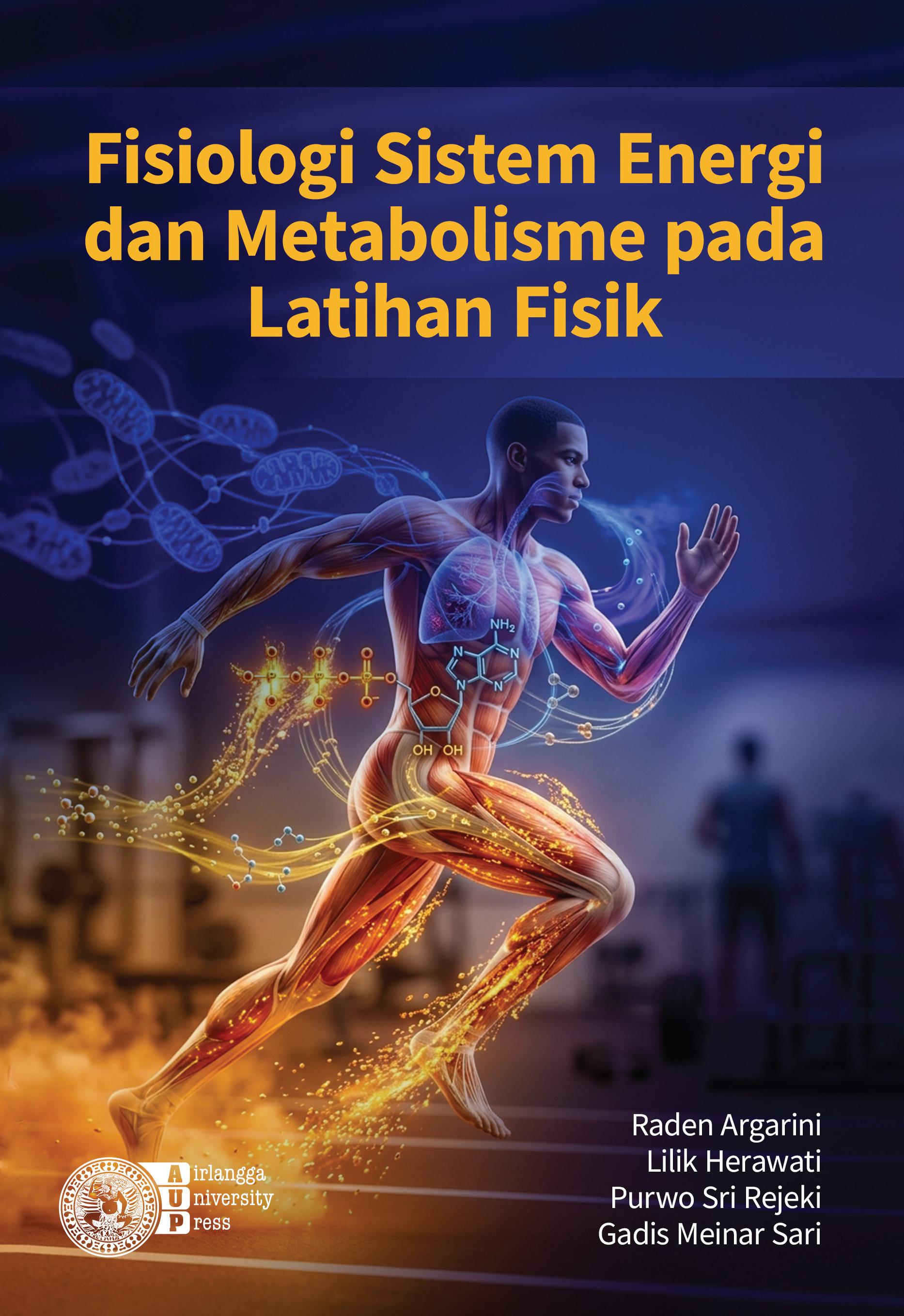
Fisiologi Sistem Energi dan Metabolisme pada Latihan Fisik
Keywords:
olahraga, metabolisme energi, fisiologi olahraga, sistem energiSynopsis
Buku ini merupakan buku ajar pada mata kuliah Fisiologi Sistem Energi dan Metabolisme pada Latihan Fisik pada program studi S2 Ilmu Kesehatan Olahraga di Fakultas Kedokteran Universitas Airlangga. Pemahaman mengenai metabolisme dan sistem energi merupakan fondasi penting dalam ilmu keolahragaan. Setiap aktivitas fisik, mulai dari intensitas rendah hingga olahraga berintensitas tinggi, memerlukan dukungan sistem energi yang bekerja secara terintegrasi. Melalui buku ini, pembaca diajak untuk memahami konsep dasar metabolisme, mekanisme sistem energi (ATP-PC, glikolitik anaerob, dan sistem oksidatif), interaksi antar sistem energi selama aktivitas olahraga, diet dan nutrisi serta implikasinya terhadap latihan, performa, dan pemulihan. Buku ini disusun dengan pendekatan ilmiah yang sistematis dan bahasa yang mudah dipahami, sehingga dapat digunakan sebagai bahan ajar maupun referensi pendukung dalam kegiatan akademik dan praktik di bidang olahraga dan kesehatan. Penulis juga berupaya mengaitkan konsep teoritis dengan aplikasi praktis agar materi yang disajikan lebih relevan dengan kebutuhan di lapangan.
Downloads
Download data is not yet available.
References
Achten, J., Halson, S., Moseley, L., Rayson, M., Casey, A., & Jeukendrup, A. (2004). Higher dietary carbohydrate content during intensified running training results in better maintenance of performance and mood state. Journal of Applied Physiology, 96(4), 1331–1340.
Ahmed, K., Tunaru, S., Tang, C., Müller, M., Gille, A., Sassmann, A., Hanson, J., & Offermanns, S. (2010). An autocrine lactate loop mediates insulin-dependent inhibition of lipolysis through GPR81. Cell Metabolism, 11(4), 311–319.
Ainsworth, B. E., Haskell, W. L., Whitt, M. C., Irwin, M. L., Swartz, A. M., Strath, S. J., O’brien, W. L., Bassett, D. R., Schmitz, K. H., & Emplaincourt, P. O. (2000). Compendium of physical activities: An update of activity codes and MET intensities. Medicine & Science in Sports & Exercise, 32(9), S498–S516.
Amaro-Gahete, F. J., Jurado-Fasoli, L., De-la-O, A., Gutierrez, Á., Castillo, M. J., & Ruiz, J. R. (2018). Accuracy and Validity of Resting Energy Expenditure Predictive Equations in Middle-Aged Adults. Nutrients, 10(11), 1635. https://doi.org/10.3390/nu10111635
Aristizabal, J. C., Freidenreich, D. J., Volk, B. M., Kupchak, B. R., Saenz, C., Maresh, C. M., Kraemer, W. J., & Volek, J. S. (2015). Effect of resistance training on resting metabolic rate and its estimation by a dual-energy X-ray absorptiometry metabolic map. European Journal of Clinical Nutrition, 69(7), 831–836. https://doi.org/10.1038/ejcn.2014.216
Balli, S., Shumway, K. R., & Sharan, S. (2025). Physiology, Fever. In StatPearls. StatPearls Publishing. http://www.ncbi.nlm.nih.gov/books/NBK562334/
Barnes, K. R., & Kilding, A. E. (2015). Running economy: Measurement, norms, and determining factors. Sports Medicine - Open, 1(1), 8. https://doi.org/10.1186/s40798-015-0007-y
Berggren, E. K., O’Tierney-Ginn, P., Lewis, S., Presley, L., De-Mouzon, S. H., & Catalano, P. M. (2017). Variations in resting energy expenditure: Impact on gestational weight gain. American Journal of Obstetrics and Gynecology, 217(4), 445.e1-445.e6. https://doi.org/10.1016/j.ajog.2017.05.054
Branch, J. D. (2003). Effect of Creatine Supplementation on Body Composition and Performance: A Meta-analysis. International Journal of Sport Nutrition and Exercise Metabolism, 13(2), 198–226. https://doi.org/10.1123/ijsnem.13.2.198
Burdon, C. A., Spronk, I., Cheng, H. L., & O’Connor, H. T. (2017). Effect of Glycemic Index of a Pre-exercise Meal on Endurance Exercise Performance: A Systematic Review and Meta-analysis. Sports Medicine, 47(6), 1087–1101. https://doi.org/10.1007/s40279-016-0632-8
Burke, L. M., Kiens, B., & Tripton, K. D. (2008). Optimising and enhancing human performance through nutrition. In N. A. S. Taylor & H. Groeller (Eds.), Physiological Bases of Human Performance during Work and Exercise (1st ed., pp. 545–571). Elsevier.
Burke, L. M., Van Loon, L. J. C., & Hawley, J. A. (2017). Postexercise muscle glycogen resynthesis in humans. Journal of Applied Physiology, 122(5), 1055–1067. https://doi.org/10.1152/japplphysiol.00860.2016
Calcagno, M., Kahleova, H., Alwarith, J., Burgess, N. N., Flores, R. A., Busta, M. L., & Barnard, N. D. (2019). The Thermic Effect of Food: A Review. Journal of the American College of Nutrition, 38(6), 547–551. https://doi.org/10.1080/07315724.2018.1552544
Cancello, R., Soranna, D., Brunani, A., Scacchi, M., Tagliaferri, A., Mai, S., Marzullo, P., Zambon, A., & Invitti, C. (2018). Analysis of predictive equations for estimating resting energy expenditure in a large cohort of morbidly obese patients. Frontiers in Endocrinology, 9, 367.
Cao, L., Jiang, Y., Li, Q., Wang, J., & Tan, S. (2019). Exercise Training at Maximal Fat Oxidation Intensity for Overweight or Obese Older Women: A Randomized Study. Journal of Sports Science & Medicine, 18(3), 413–418.
Cao, W., He, Y., Fu, R., Chen, Y., Yu, J., & He, Z. (2025). A review of carbohydrate supplementation approaches and strategies for optimizing performance in elite long-distance endurance. Nutrients, 17(5), 918.
Cermak, N. M., & van Loon, L. J. (2013). The use of carbohydrates during exercise as an ergogenic aid. Sports Medicine, 43(11), 1139–1155.
Chang, A. J., Ortega, F. E., Riegler, J., Madison, D. V., & Krasnow, M. A. (2015). Oxygen regulation of breathing through an olfactory receptor activated by lactate. Nature, 527(7577), 240–244.
Chua, M. T., Balasekaran, G., Ihsan, M., & Aziz, A. R. (2019). Effects of Pre-Exercise High and Low Glycaemic Meal on Intermittent Sprint and Endurance Exercise Performance. Sports, 7(8), 188. https://doi.org/10.3390/sports7080188
Cooney, C., Daly, E., McDonagh, M., & Ryan, L. (2021). Evaluation of Measured Resting Metabolic Rate for Dietary Prescription in Ageing Adults with Overweight and Adiposity-Based Chronic Disease. Nutrients, 13(4), 1229. https://doi.org/10.3390/nu13041229
Costanzo, L. S. (2021). Costanzo Physiology E-Book: Costanzo Physiology E-Book. Elsevier Health Sciences.
Cox, G. R., Clark, S. A., Cox, A. J., Halson, S. L., Hargreaves, M., Hawley, J. A., Jeacocke, N., Snow, R. J., Yeo, W. K., & Burke, L. M. (2010). Daily training with high carbohydrate availability increases exogenous carbohydrate oxidation during endurance cycling. Journal of Applied Physiology, 109(1), 126–134.
de Oliveira, E. P., Burini, R. C., & Jeukendrup, A. (2014). Gastrointestinal complaints during exercise: Prevalence, etiology, and nutritional recommendations. Sports Medicine, 44(Suppl 1), 79–85.
de Souza, J. G., Del Coso, J., Fonseca, F. de S., Silva, B. V. C., de Souza, D. B., da Silva Gianoni, R. L., Filip-Stachnik, A., Serrão, J. C., & Claudino, J. G. (2022). Risk or benefit? Side effects of caffeine supplementation in sport: A systematic review. European Journal of Nutrition, 61(8), 3823–3834.
Dünnwald, T., Gatterer, H., Faulhaber, M., Arvandi, M., & Schobersberger, W. (2019). Body Composition and Body Weight Changes at Different Altitude Levels: A Systematic Review and Meta-Analysis. Frontiers in Physiology, 10, 430. https://doi.org/10.3389/fphys.2019.00430
Emhoff, C.-A. W., & Messonnier, L. A. (2023). Concepts of lactate metabolic clearance rate and lactate clamp for metabolic inquiry: A mini-review. Nutrients, 15(14), 3213.
Fattor, J. A., Miller, B. F., Jacobs, K. A., & Brooks, G. A. (2005). Catecholamine response is attenuated during moderate-intensity exercise in response to the “lactate clamp.” American Journal of Physiology-Endocrinology and Metabolism, 288(1), E143–E147.
Febriana, N. R. N., Argarini, R., Subagio, I., Purwanto, B., & Mazalan, N. S. (2024). Effects of date extract ingestion on high-intensity cycling performance. Journal of Physical Education and Sport, 24(12), 2154–2160.
Foss, M. L., & Keteyian, S. J. (1998a). Fox’s Physiological basis for exercise and sport (6th ed.). TheMcGraw-Hill-Companies.
Foss, M. L., & Keteyian, S. J. (1998b). Fox’s Physiological Basis for Exercise and Sport. WCB/McGraw-Hill.
Foss, M. L., Keteyian, S. J., & Fox, E. L. (1998). Fox’s physiological basis for exercise and sport. (No Title).
Góes, C. R. de, Balbi, A. L., & Ponce, D. (2018). Evaluation of Factors Associated with Hypermetabolism and Hypometabolism in Critically Ill AKI Patients. Nutrients, 10(4), 505. https://doi.org/10.3390/nu10040505
Graham, T. E. (2001). Caffeine and exercise. Sports Medicine, 31(11), 785–807.
Greer, B. K., O’brien, J., Hornbuckle, L., & Panton, P. (2021). EPOC Comparison Between Resistance Training and High-Intensity Interval Training in Aerobically Fit Women. International Journal of Exercise Science, 14(2). https://doi.org/10.70252/ODIN6912
Grgic, J., Trexler, E. T., Lazinica, B., & Pedisic, Z. (2018). Effects of caffeine intake on muscle strength and power: A systematic review and meta-analysis. Journal of the International Society of Sports Nutrition, 15(1), 11.
Hadzic, M., Eckstein, M. L., & Schugardt, M. (2019). The impact of sodium bicarbonate on performance in response to exercise duration in athletes: A systematic review. Journal of Sports Science & Medicine, 18(2), 271.
Hall, J. E., & Hall, M. E. (2020a). Guyton and Hall Textbook of Medical Physiology E-Book: Guyton and Hall Textbook of Medical Physiology E-Book. Elsevier Health Sciences.
Hall, J. E., & Hall, M. E. (2020b). Guyton and Hall Textbook of Medical Physiology E-Book: Guyton and Hall Textbook of Medical Physiology E-Book. Elsevier Health Sciences.
Hargreaves, M. (2008). Performance limitation due to Substrate availability. In N. A. S. Taylor & H. Groeller (Eds.), Physiological Bases of Human Performance during Work and Exercise (1st ed., pp. 127–133). Elsevier.
Hargreaves, M., & Spriet, L. L. (2020). Skeletal muscle energy metabolism during exercise. Nature Metabolism, 2(9), 817–828.
Hill, C. A., Harris, R. C., Kim, H. J., Harris, B. D., Sale, C., Boobis, L. H., Kim, C. K., & Wise, J. A. (2007). Influence of β-alanine supplementation on skeletal muscle carnosine concentrations and high intensity cycling capacity. Amino Acids, 32(2), 225–233.
Hoppeler, H., & Flueck, M. (2003). Plasticity of skeletal muscle mitochondria: Structure and function. Medicine & Science in Sports & Exercise, 35(1), 95–104.
Huo, C., Song, Z., Yin, J., Zhu, Y., Miao, X., Qian, H., Wang, J., Ye, L., & Zhou, L. (2022). Effect of Acute Cold Exposure on Energy Metabolism and Activity of Brown Adipose Tissue in Humans: A Systematic Review and Meta-Analysis. Frontiers in Physiology, 13, 917084. https://doi.org/10.3389/fphys.2022.917084
Jentjens, R. L., Achten, J., & Jeukendrup, A. E. (2004). High oxidation rates from combined carbohydrates ingested during exercise. Medicine & Science in Sports & Exercise, 36(9), 1551–1558.
Jeukendrup, A. (2013). The new carbohydrate intake recommendations. 75, 63–71.
Jeukendrup, A. (2014). A step towards personalized sports nutrition: Carbohydrate intake during exercise. Sports Medicine, 44(Suppl 1), 25–33.
Jeukendrup, A. E. (2017). Training the Gut for Athletes. Sports Medicine, 47(1), 101–110. https://doi.org/10.1007/s40279-017-0690-6
Jeukendrup, A. E., & Moseley, L. (2010). Multiple transportable carbohydrates enhance gastric emptying and fluid delivery. Scandinavian Journal of Medicine & Science in Sports, 20(1), 112–121.
Jones, A. M., Vanhatalo, A., Seals, D. R., Rossman, M. J., Piknova, B., & Jonvik, K. L. (2021). Dietary Nitrate and Nitric Oxide Metabolism: Mouth, Circulation, Skeletal Muscle, and Exercise Performance. Medicine & Science in Sports & Exercise, 53(2), 280–294. https://doi.org/10.1249/MSS.0000000000002470
Kemenkes. (2021). Kemenkes – Permenkes No 28 Tahun 2019 Angka Kecukupan Gizi yang Dianjurkan—TP2S. https://stunting.go.id/kemenkes-permenkes-no-28-tahun-2019-angka-kecukupan-gizi-yang-dianjurkan/
Kerksick, C. M., Arent, S., Schoenfeld, B. J., Stout, J. R., Campbell, B., Wilborn, C. D., Taylor, L., Kalman, D., Smith-Ryan, A. E., Kreider, R. B., Willoughby, D., Arciero, P. J., VanDusseldorp, T. A., Ormsbee, M. J., Wildman, R., Greenwood, M., Ziegenfuss, T. N., Aragon, A. A., & Antonio, J. (2017). International society of sports nutrition position stand: Nutrient timing. Journal of the International Society of Sports Nutrition, 14(1), 33. https://doi.org/10.1186/s12970-017-0189-4
Kolmogorov, S., Vorontsov, A., & Vilas-Boas, J. P. (2021). Metabolic Power, Active Drag, Mechanical and Propelling Efficiency of Elite Swimmers at 100 Meter Events in Different Competitive Swimming Techniques. Applied Sciences, 11(18), 8511. https://doi.org/10.3390/app11188511
Lambert, G. P., Lang, J., Bull, A., Eckerson, J., Lanspa, S., & O’Brien, J. (2008). Fluid tolerance while running: Effect of repeated trials. International Journal of Sports Medicine, 29(11), 878–882.
Law, M. L. (2022). Cancer cachexia: Pathophysiology and association with cancer-related pain. Frontiers in Pain Research, 3, 971295. https://doi.org/10.3389/fpain.2022.971295
Limnararat, K. (2025). Effect of carbohydrate-protein supplement on anaerobic capacity after physical activity. International Journal of ADVANCED AND APPLIED SCIENCES, 12(2), 31–43. https://doi.org/10.21833/ijaas.2025.02.004
Liu, C., Wu, J., Zhu, J., Kuei, C., Yu, J., Shelton, J., Sutton, S. W., Li, X., Yun, S. J., & Mirzadegan, T. (2009). Lactate inhibits lipolysis in fat cells through activation of an orphan G-protein-coupled receptor, GPR81. Journal of Biological Chemistry, 284(5), 2811–2822.
Longo, N., Frigeni, M., & Pasquali, M. (2016). Carnitine transport and fatty acid oxidation. Biochimica et Biophysica Acta (BBA) - Molecular Cell Research, 1863(10), 2422–2435. https://doi.org/10.1016/j.bbamcr.2016.01.023
Lopez, P., Taaffe, D. R., Galvão, D. A., Newton, R. U., Nonemacher, E. R., Wendt, V. M., Bassanesi, R. N., Turella, D. J. P., & Rech, A. (2022). Resistance training effectiveness on body composition and body weight outcomes in individuals with overweight and obesity across the lifespan: A systematic review and meta‐analysis. Obesity Reviews, 23(5), e13428. https://doi.org/10.1111/obr.13428
Łuszczki, E., Bartosiewicz, A., Kuchciak, M., Dereń, K., Oleksy, Ł., Adamska, O., & Mazur, A. (2022a). Longitudinal analysis of resting energy expenditure and body mass composition in physically active children and adolescents. BMC Pediatrics, 22(1), 260. https://doi.org/10.1186/s12887-022-03326-x
Łuszczki, E., Bartosiewicz, A., Kuchciak, M., Dereń, K., Oleksy, Ł., Adamska, O., & Mazur, A. (2022b). Longitudinal analysis of resting energy expenditure and body mass composition in physically active children and adolescents. BMC Pediatrics, 22(1), 260. https://doi.org/10.1186/s12887-022-03326-x
Matthews, C. E., Patel, S., Saint-Maurice, P. F., Loftfield, E., Keadle, S. K., Chen, K. Y., Brychta, R., Lamunion, S., & Berrigan, D. (2023). Physical Activity Levels (PAL) in US Adults—2019. Medicine & Science in Sports & Exercise, 55(5), 884–891. https://doi.org/10.1249/MSS.0000000000003102
McMahon, N. F., Leveritt, M. D., & Pavey, T. G. (2017). The effect of dietary nitrate supplementation on endurance exercise performance in healthy adults: A systematic review and meta-analysis. Sports Medicine, 47(4), 735–756.
Mifflin, M. D., St Jeor, S. T., Hill, L. A., Scott, B. J., Daugherty, S. A., & Koh, Y. O. (1990). A new predictive equation for resting energy expenditure in healthy individuals. The American Journal of Clinical Nutrition, 51(2), 241–247.
Moitzi, A. M., & König, D. (2023). Longer-Term Effects of the Glycaemic Index on Substrate Metabolism and Performance in Endurance Athletes. Nutrients, 15(13), 3028. https://doi.org/10.3390/nu15133028
Murray, B., & Rosenbloom, C. (2018). Fundamentals of glycogen metabolism for coaches and athletes. Nutrition Reviews, 76(4), 243–259. https://doi.org/10.1093/nutrit/nuy001
Naderi, A., Gobbi, N., Ali, A., Berjisian, E., Hamidvand, A., Forbes, S. C., Koozehchian, M. S., Karayigit, R., & Saunders, B. (2023). Carbohydrates and Endurance Exercise: A Narrative Review of a Food First Approach. Nutrients, 15(6), 1367. https://doi.org/10.3390/nu15061367
Namma-Motonaga, K., Kondo, E., Osawa, T., Shiose, K., Kamei, A., Taguchi, M., & Takahashi, H. (2022). Effect of Different Carbohydrate Intakes within 24 Hours after Glycogen Depletion on Muscle Glycogen Recovery in Japanese Endurance Athletes. Nutrients, 14(7), 1320. https://doi.org/10.3390/nu14071320
National Center for Biotechnology Information. (2026, February 5). Caffeine. PubChem Compound Summary for CID 2519. https://pubchem.ncbi.nlm.nih.gov/compound/Caffeine
Ndahimana, D., Choi, Y.-J., Park, J.-H., Ju, M.-J., & Kim, E.-K. (2018). Validity of predictive equations for resting energy expenditure in Korean non-obese adults. Nutrition Research and Practice, 12(4), 283. https://doi.org/10.4162/nrp.2018.12.4.283
Orozco-Ruiz, X., Pichardo-Ontiveros, E., Tovar, A. R., Torres, N., Medina-Vera, I., Prinelli, F., Lafortuna, C. L., & Guevara-Cruz, M. (2018a). Development and validation of new predictive equation for resting energy expenditure in adults with overweight and obesity. Clinical Nutrition, 37(6), 2198–2205.
Orozco-Ruiz, X., Pichardo-Ontiveros, E., Tovar, A. R., Torres, N., Medina-Vera, I., Prinelli, F., Lafortuna, C. L., & Guevara-Cruz, M. (2018b). Development and validation of new predictive equation for resting energy expenditure in adults with overweight and obesity. Clinical Nutrition, 37(6), 2198–2205. https://doi.org/10.1016/j.clnu.2017.10.022
Périard, J. D., Eijsvogels, T. M. H., & Daanen, H. A. M. (2021). Exercise under heat stress: Thermoregulation, hydration, performance implications, and mitigation strategies. Physiological Reviews, 101(4), 1873–1979. https://doi.org/10.1152/physrev.00038.2020
Poon, E. T.-C., Iu, J. C.-K., Sum, W. M.-K., Wong, P.-S., Lo, K. K.-H., Ali, A., Burns, S. F., & Trexler, E. T. (2025). Dietary Nitrate Supplementation and Exercise Performance: An Umbrella Review of 20 Published Systematic Reviews with Meta-analyses. Sports Medicine, 1–19.
Porter, C. K., Cortes, K. M., Levy, O., & Riddell, E. A. (2024). The effects of humidity on thermoregulatory physiology of a small songbird. The Journal of Experimental Biology, 227(13), jeb247357. https://doi.org/10.1242/jeb.247357
Porter, J., Nguo, K., Collins, J., Kellow, N., Huggins, C. E., Gibson, S., Davidson, Z., Schoeller, D., Prentice, R., Neuhouser, M. L., Snetselaar, L., & Truby, H. (2019). Total energy expenditure measured using doubly labeled water compared with estimated energy requirements in older adults (≥65 y): Analysis of primary data. The American Journal of Clinical Nutrition, 110(6), 1353–1361. https://doi.org/10.1093/ajcn/nqz200
Preau, S., Vodovar, D., Jung, B., Lancel, S., Zafrani, L., Flatres, A., Oualha, M., Voiriot, G., Jouan, Y., Joffre, J., Uhel, F., De Prost, N., Silva, S., Azabou, E., & Radermacher, P. (2021). Energetic dysfunction in sepsis: A narrative review. Annals of Intensive Care, 11(1), 104. https://doi.org/10.1186/s13613-021-00893-7
Purdom, T., Kravitz, L., Dokladny, K., & Mermier, C. (2018). Understanding the factors that effect maximal fat oxidation. Journal of the International Society of Sports Nutrition, 15(1), 3. https://doi.org/10.1186/s12970-018-0207-1
Ramuth, H., Schutz, Y., Calonne, J., Joonas, N., & Dulloo, A. G. (2020). Total energy expenditure assessed by doubly labeled water technique and estimates of physical activity in Mauritian children: Analysis by gender and ethnicity. European Journal of Clinical Nutrition, 74(3), 445–453. https://doi.org/10.1038/s41430-019-0477-y
Rawal, G., & Yadav, S. (2015). Nutrition in chronic obstructive pulmonary disease: A review. Journal of Translational Internal Medicine, 3(4), 151–154. https://doi.org/10.1515/jtim-2015-0021
Reinhard, C., & Galloway, S. D. R. (2022). Carbohydrate Intake Practices and Determinants of Food Choices During Training in Recreational, Amateur, and Professional Endurance Athletes: A Survey Analysis. Frontiers in Nutrition, 9. https://doi.org/10.3389/fnut.2022.862396
Rothschild, J. A., Kilding, A. E., & Plews, D. J. (2020). What should I eat before exercise? Pre-exercise nutrition and the response to endurance exercise: Current prospective and future directions. Nutrients, 12(11), 3473.
Saunders, B., Elliott-Sale, K., Artioli, G. G., Swinton, P. A., Dolan, E., Roschel, H., Sale, C., & Gualano, B. (2017). β-alanine supplementation to improve exercise capacity and performance: A systematic review and meta-analysis. British Journal of Sports Medicine, 51(8), 658–669.
Savard, C., Lebrun, A., O’Connor, S., Fontaine-Bisson, B., Haman, F., & Morisset, A.-S. (2020a). Energy expenditure during pregnancy: A systematic review. Nutrition Reviews, 79(4), 394–409. https://doi.org/10.1093/nutrit/nuaa093
Savard, C., Lebrun, A., O’Connor, S., Fontaine-Bisson, B., Haman, F., & Morisset, A.-S. (2020b). Energy expenditure during pregnancy: A systematic review. Nutrition Reviews, 79(4), 394–409. https://doi.org/10.1093/nutrit/nuaa093
Sayuti, I. K., & Yenrina, I. R. (2015). Antioksidan. APPTI, Padang.
Sharma, B., & Mukhopadhyay*, K. (2024). Emerging Trends in Sports Cardiology: The Role of Micronutrients in Cardiovascular Health and Performance. Journal of Sports Medicine and Therapy, 9(3), 073–082. https://doi.org/10.29328/journal.jsmt.1001086.php%253Futm_source=chatgpt.com
Sherwood, L. (2006). Fundamentals of physiology. Belmont, CA: Thompson Brooks/Cole.
Southward, K., Rutherfurd-Markwick, K. J., & Ali, A. (2018a). Correction to: The effect of acute caffeine ingestion on endurance performance: A systematic review and meta-analysis. Sports Medicine, 48(10), 2425–2441.
Southward, K., Rutherfurd-Markwick, K. J., & Ali, A. (2018b). The effect of acute caffeine ingestion on endurance performance: A systematic review and meta–analysis. Sports Medicine, 48(8), 1913–1928.
Spriet, L. L. (2014). Exercise and sport performance with low doses of caffeine. Sports Medicine, 44(Suppl 2), 175–184.
Stubelj, M., Teraž, K., & Poklar Vatovec, T. (2020). Predicting Equations and Resting Energy Expenditure Changes in Overweight Adults. Slovenian Journal of Public Health, 59(1), 33–41. https://doi.org/10.2478/sjph-2020-0005
Tatucu-Babet, O. A., Nguo, K., Lambell, K. J., Romero, L., Earthman, C. P., & Ridley, E. J. (2022). Doubly labelled water for determining total energy expenditure in adult critically ill and acute care hospitalized inpatients: A scoping review. Clinical Nutrition, 41(2), 424–432. https://doi.org/10.1016/j.clnu.2021.12.017
Torres-Torrelo, H., Ortega-Sáenz, P., Gao, L., & López-Barneo, J. (2021). Lactate sensing mechanisms in arterial chemoreceptor cells. Nature Communications, 12(1), 4166.
Toussaint, H., & Truijens, M. (2005). Biomechanical aspects of peak performance in human swimming. Animal Biology, 55(1), 17–40. https://doi.org/10.1163/1570756053276907
Van De Walle, G. P., & Vukovich, M. D. (2018). The effect of nitrate supplementation on exercise tolerance and performance: A systematic review and meta-analysis. The Journal of Strength & Conditioning Research, 32(6), 1796–1808.
Vicente-Salar, N., Fuster-Muñoz, E., & Martínez-Rodríguez, A. (2022). Nutritional ergogenic aids in combat sports: A systematic review and meta-analysis. Nutrients, 14(13), 2588.
Vitale, K., & Getzin, A. (2019). Nutrition and supplement update for the endurance athlete: Review and recommendations. Nutrients, 11(6), 1289.
Vitamin D: Evidence-Based Health Benefits and Recommendations for Population Guidelines. (n.d.). Retrieved December 2, 2025, from https://www.mdpi.com/2072-6643/17/2/277?utm_source=chatgpt.com
Wang, Z., Qiu, B., Gao, J., & Del Coso, J. (2022). Effects of caffeine intake on endurance running performance and time to exhaustion: A systematic review and meta-analysis. Nutrients, 15(1), 148.
Wu, W., Chen, Z., Zhou, H., Wang, L., Li, X., Lv, Y., Sun, T., & Yu, L. (2024). Effects of acute ingestion of caffeine capsules on muscle strength and muscle endurance: A systematic review and meta-analysis. Nutrients, 16(8), 1146.
Downloads
Published
September 29, 2026
Series
Categories
Copyright (c) 2026 Airlangga University Press
License

This work is licensed under a Creative Commons Attribution-NonCommercial-ShareAlike 4.0 International License.