
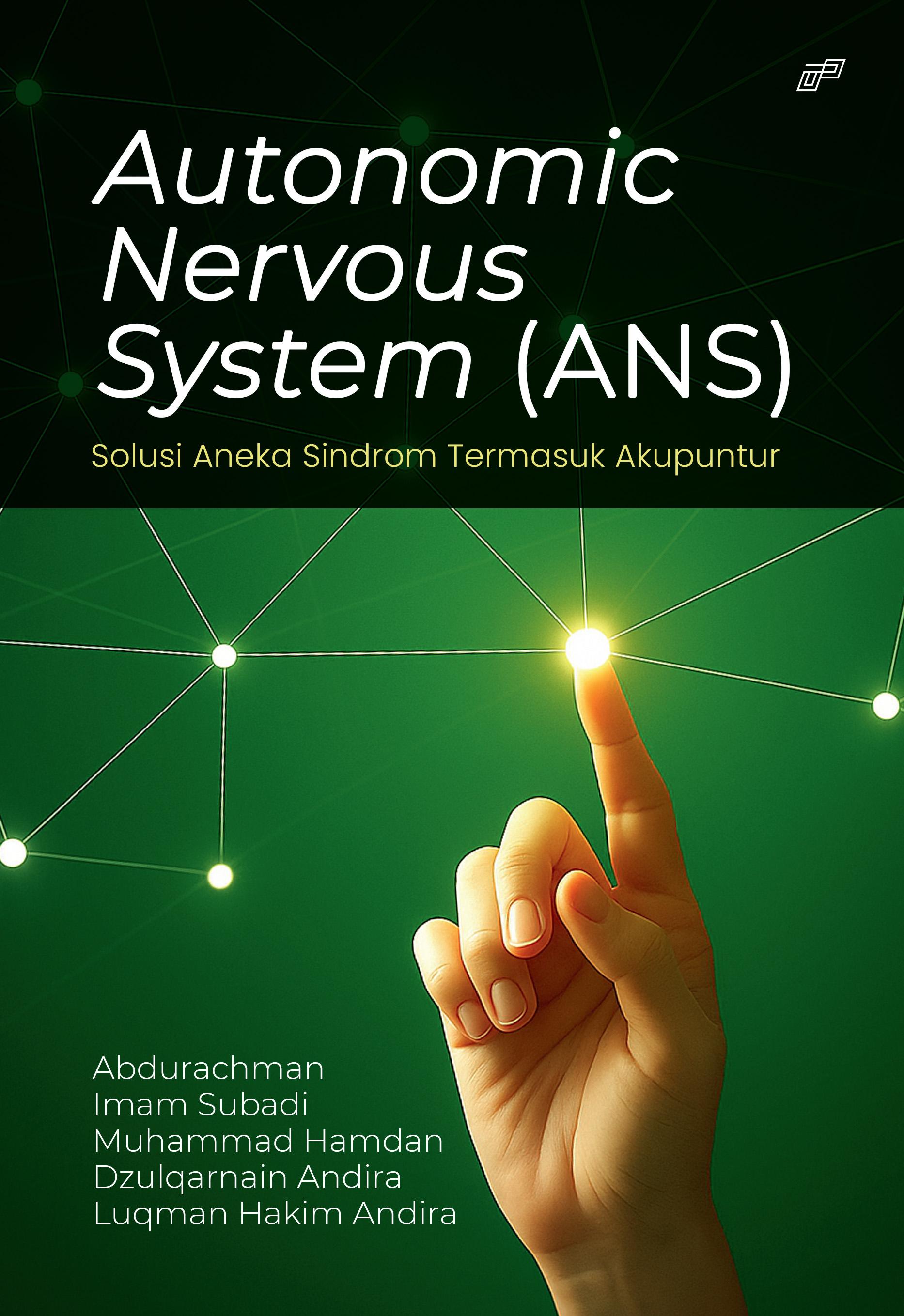
Autonomic Nervous System (ANS): Solusi Aneka Sindrom Termasuk Akupunktur
Keywords:
autonomic nervous system, akupunktur, ANS, sistem sarafSynopsis
Buku ini hadir sebagai kontribusi penting dalam memahami peran vital Sistem Saraf Otonom (ANS) dalam mengelola berbagai fungsi tubuh dan kaitannya dengan sejumlah sindrom medis serta terapi akupunktur. Dalam dunia medis modern, meskipun peran ANS dalam pengaturan fungsi organ sudah diakui, pemahaman mendalam tentang bagaimana disfungsi ANS berkontribusi terhadap berbagai sindrom, seperti sindrom metabolik, hipertensi, dan gangguan kecemasan, masih kurang diperhatikan. Buku ini memberikan panduan mendalam, tidak hanya dalam memahami anatomi dan fisiologi ANS, tetapi juga dalam mengaplikasikan akupunktur sebagai pendekatan terapi yang efektif.
Buku ini diharapkan menjadi referensi yang komprehensif bagi mahasiswa, peneliti, serta praktisi medis yang ingin memperdalam wawasan tentang ANS dan potensi terapinya. Setiap bab dalam buku ini dirancang dengan mengintegrasikan penelitian terbaru dan bukti klinis terkini untuk memberikan gambaran yang lengkap dan praktis. Kami berharap buku ini dapat memperkaya pengetahuan serta meningkatkan pemahaman pembaca tentang hubungan kompleks antara ANS, berbagai sindrom medis, dan terapi akupunktur.
Downloads
Download data is not yet available.
References
Azizah, N., Santoso, B., Abdurachman., Hidayati, H.B., Imandiri, A., (2024). A study is examining how postpartum pain after cesarean section (SC) can be reduced by boosting levels of β-endorphin through electroacupuncture stimulation at the specified points LI4 and SP6. Pharmacognosy Journal, 16(3), 670-676.
Bagga, A. & Mantan, M. (2005). Nephrotic syndrome in children. Indian Journal of Medical Research, 122(1), pp. 13-28.
Barajas, L., Liu, L. & Powers, K. (1992). Innervation of the renal cortical tubules: A quantitative analysis. American Journal of Physiology-Renal Physiology, 263(4), pp. F671-F682.
Benarroch, E. E. (2014). The autonomic nervous system: Functional organization and clinical correlations. Neurologic Clinics, 32(4), pp. 769-779.
Bremner, J.D. (2006). Traumatic stress: Effects on the brain. Dialogues in Clinical Neuroscience, 8(4), pp. 445-461.
Chalmers, J.A., Quintana, D.S., Abbott, M.J., & Kemp, A.H. (2014). Anxiety disorders are associated with reduced heart rate variability: A meta-analysis. Frontiers in Psychiatry, 5(80), pp. 1-10.
Choi, E.M., Jiang, F. & Yoon, Y.M. (2011). Effects of acupuncture on glucose metabolism and insulin sensitivity in patients with type 2 diabetes mellitus: A systematic review. Acupuncture in Medicine, 29(4), pp. 289-294.
Chrousos, G.P. (2009). Stress and disorders of the stress system. Nature Reviews Endocrinology, 5(7), pp. 374-381.
Cohen, H., Kotler, M., Matar, M.A., Kaplan, Z., & Zohar, J. (2020). Coping with trauma: The role of psychological and physiological responses in PTSD. Neuroscience and Biobehavioral Reviews, 118, pp. 297-306.
DiBona, G.F. (2002). Sympathetic nervous system and the kidney in hypertension. Current Opinion in Nephrology and Hypertension, 11(2), pp. 197-200.
DiBona, G.F. & Kopp, U.C. (1997). Neural control of renal function. Physiological Reviews, 77(1), pp. 75-197.
Elenkov, I.J., Wilder, R.L., Chrousos, G.P. & Vizi, E.S. (2000). The sympathetic nerve—an integrative interface between two supersystems: the brain and the immune system. Pharmacological Reviews, 52(4), pp. 595-638.
Esler, M., Krum, H., Sobotka, P.A., Schlaich, M., Schmieder, R.E. & Böhm, M. (2015). Renal sympathetic denervation in patients with treatment-resistant hypertension (the Symplicity HTN-2 trial): A randomised controlled trial. The Lancet, 376(9756), pp. 1903-1909.
Esler, M., Lambert, E., & Schlaich, M. (2015). Point: Chronic activation of the sympathetic nervous system is the dominant contributor to systemic hypertension. Journal of Applied Physiology, 109(6), pp. 1996-1998.
Fogo, A. B. (2018). The Kidney. In Robbins and Cotran Pathologic Basis of Disease. 10th ed. Elsevier.
Fukuda, H., Imai, K. & Nara, H. (2018). Effect of acupuncture on anxiety reduction in dental patients: A systematic review and meta-analysis. Journal of Acupuncture and Meridian Studies, 11(2), pp. 30-39.
Fukudo, S. (2013). Irritable bowel syndrome: The role of autonomic dysregulation. Current Gastroenterology Reports, 15(10), pp. 1-8.
Glaser, R. & Kiecolt-Glaser, J.K. (2005). Stress-induced immune dysfunction: Implications for health. Nature Reviews Immunology, 5(3), pp. 243-251.
Grassi, G., Seravalle, G., & Mancia, G. (2018). Sympathetic activation in cardiovascular and metabolic diseases. Experimental Physiology, 100(12), pp. 1462-1468.
Grassi, G., Seravalle, G., Quarti-Trevano, F., Dell’Oro, R., Arenare, F., Spaziani, D. & Mancia, G. (2018). Sympathetic and baroreflex cardiovascular control in hypertension-related left ventricular dysfunction. Hypertension, 51(2), pp. 552-558.
Guyton, A.C. & Hall, J.E. (2021). Textbook of Medical Physiology. 14th ed. Philadelphia: Elsevier.
Hall, J.E., Guyton, A.C. & Hall, M.E. (2018). Guyton and Hall Textbook of Medical Physiology. 13th ed. Philadelphia: Saunders.
Hopayian, K. & Danielyan, A. (2018). Piriformis syndrome: diagnosis and management. Journal of Family Practice, 67(2), pp. 88-94.
Huang, W., Kutner, N. & Bliwise, D.L. (2012). A systematic review of the effects of acupuncture in treating insomnia. Sleep Medicine Reviews, 15(1), pp. 9-17.
Kavoussi, B. & Ross, B.E. (2007). The neuroimmune basis of antiinflammatory acupuncture. Integrative Cancer Therapies, 6(3), pp. 251-257.
Kemeny, M.E. (2003). The psychobiology of stress. Current Directions in Psychological Science, 12(4), pp. 124-129.
Kenney, M.J. & Ganta, C.K. (2014). Autonomic Nervous System and immune system interactions. Comprehensive Physiology, 4(3), pp. 1177-1200.
Lara, H.E., Ferruz, J.L., Luza, S., Bustamante, D., Borges, Y. & Parada, M. (2014). Activation of ovarian sympathetic nerves in Polycystic Ovary Syndrome. Endocrinology, 134(5), pp. 2515-2519.
Levine, W. N. & Kashyap, C. P. (2019). Frozen shoulder: Diagnosis and management. Journal of Orthopaedic Research, 37(6), pp. 1160-1167.
Liang, F., Litscher, G., Gu, X. & Huang, T. (2018). Acupuncture clinical research: Update 2018. Evidence-Based Complementary and Alternative Medicine, 2018(3810865), pp. 1-3.
Liberzon, I., & Abelson, J.L. (2016). Context processing and the neurobiology of PTSD. Neuron, 92(1), pp. 14-30.
Licht, C.M., de Geus, E.J. & Penninx, B.W. (2010). Dysregulation of the Autonomic Nervous System predicts the development of the metabolic syndrome. Journal of Clinical Psychiatry, 71(10), pp. 1396-1404.
Liu, Z., Sun, F., Wang, L., Wang, H., Zhang, D., Xu, H. & Yan, Z. (2013). Effects of acupuncture on sleep quality and anxiety in patients undergoing chemotherapy: A randomized, placebo-controlled trial. Acupuncture in Medicine, 31(2), pp. 98-102.
Longhurst, J. C. (2013). Acupuncture’s cardiovascular actions: a mechanistic perspective. Medical Acupuncture, 25(2), pp. 101-113.
Longhurst, J.C. (2013). Defining meridians: A modern basis of understanding. Journal of Acupuncture and Meridian Studies, 6(5), pp. 244-252.
Longhurst, J.C. (2013). Reflexes from the heart and lungs: Experimental basis and clinical implications. Physiological Reviews, 81(1), pp. 79-123.
McEwen, B.S. (2007). Physiology and neurobiology of stress and adaptation: Central role of the brain. Physiological Reviews, 87(3), pp. 873-904.
Middlekauff, H.R., Nguyen, A.H., Negrao, C.E. & Nitzsche, E.U. (2004). Acupuncture effects on sympathetic neural regulation in advanced heart failure patients. Journal of Applied Physiology, 96(3), pp. 1112-1118.
Miller, A.H., Maletic, V. & Raison, C.L. (2009). Inflammation and its discontents: The role of cytokines in the pathophysiology of major depression. Biological Psychiatry, 65(9), pp. 732-741.
Newton, J. L., et al. (2011). Autonomic dysfunction in chronic fatigue syndrome: Implications for pathogenesis and treatment. Quarterly Journal of Medicine, 104(3), pp. 883-891.
Osborn, J.W., Fink, G.D., Kuroki, M.T., Lorenz, J.N. & Hall, J.E. (2007). Sympathetic nervous system and the kidney in salt-sensitive hypertension. American Journal of Physiology-Regulatory, Integrative and Comparative Physiology, 293(4), pp. R1227-R1245.
Padgett, D.A. & Glaser, R. (2003). How stress influences the immune response. Trends in Immunology, 24(8), pp. 444-448.
Pariante, C.M. & Lightman, S.L. (2008). The HPA axis in major depression: Classical theories and new developments. Trends in Neurosciences, 31(9), pp. 464-468.
Park, G. & Thayer, J.F. (2014). From the heart to the mind: Cardiac vagal tone modulates top-down and bottom-up visual perception and attention to emotional stimuli. Frontiers in Psychology, 5(278), pp. 1-9.
Patton, K.T. & Thibodeau, G.A. (2020). Anatomy and Physiology. 10th ed. St. Louis: Mosby.
Pavlov, V.A. & Tracey, K.J. (2012). The vagus nerve and the inflammatory reflex—linking immunity and metabolism. Nature Reviews Endocrinology, 8(12), pp. 743-754.
Pruessner, J.C., Hellhammer, D.H. & Kirschbaum, C. (2003). Burnout, perceived stress, and cortisol responses to awakening. Psychosomatic Medicine, 65(5), pp. 824-830.
Purves, D., Augustine, G.J., Fitzpatrick, D., Hall, W.C., LaMantia, A.-S., Mooney, R.D., Platt, M.L., & White, L.E. (2018). Neuroscience. 6th ed. Sunderland: Sinauer Associates.
Qu, F., Zhang, Y., Liu, Y., Xu, H., Qiu, P., Liu, Z. & Tong, X. (2016). Effects of acupuncture on the outcomes of in vitro fertilization: A systematic review and meta-analysis. Fertility and Sterility, 97(3), pp. 599-611.
Raj, V. (2013). Hyperhidrosis and autonomic dysfunction: Pathophysiology and management. Journal of Clinical Medicine, 2(3), pp. 123-134.
Schlaich, M.P., Sobotka, P.A., Krum, H., Lambert, E. & Esler, M.D. (2012). Renal sympathetic-nerve ablation for uncontrolled hypertension. New England Journal of Medicine, 361(9), pp. 932-934.
Shaffer, F. & Ginsberg, J. P. (2017). An overview of heart rate variability metrics and norms. Frontiers in Public Health, 5, p. 258.
Sherin, J.E., & Nemeroff, C.B. (2011). Post-traumatic stress disorder: The neurobiological impact of psychological trauma. Dialogues in Clinical Neuroscience, 13(3), pp. 263-278.
Smith, A.B., Jones, C.D., & Patel, E.F. (2020). Neural pathways and autonomic control of blood vessels: A review. Journal of Vascular Physiology, 112(3), pp. 145-159.
Standring, S. (2016). Gray's Anatomy: The Anatomical Basis of Clinical Practice. 41st ed. London: Elsevier.
Stener-Victorin, E., Waldenström, U., Andersson, S.A. & Wikland, M. (2010). Reduction of blood flow impedance in the uterine arteries of infertile women with electro-acupuncture. Human Reproduction, 11(6), pp. 1314-1317.
Thayer, J.F. & Lane, R.D. (2007). The role of vagal function in the risk for cardiovascular disease and mortality. Biological Psychology, 74(2), pp. 224-242.
Thayer, J.F., & Lane, R.D. (2009). Claude Bernard and the heart-brain connection: Further elaboration of a model of neurovisceral integration. Neuroscience and Biobehavioral Reviews, 33(2), pp. 81-88.
Tracey, K.J. (2002). The inflammatory reflex. Nature, 420(6917), pp. 853-859.
Verbalis, J.G. (2003). Disorders of water balance. In: Brenner & Rector’s The Kidney, 7th ed., Philadelphia: Saunders. pp. 857-908.
Vinik, A.I., Ziegler, D., Hermann-Lingen, C., Antoniewicz, R. & Overkamp, D. (2013). Diabetic autonomic neuropathy: Pathogenesis, diagnosis, and treatment. Diabetes Care, 36(1), pp. 1689-1699.
Virk, A.S., Webster, L.M. & Lees, C.C. (2013). Role of the Autonomic Nervous System in pre-eclampsia. Pregnancy Hypertension, 3(3), pp. 130-135.
Zhou, W., Benharash, P. (2020). Effects and mechanisms of acupuncture based on the principle of meridians. Journal of Acupuncture and Meridian Studies, 13(1), pp. 1-7.
Zijlstra, F.J., van den Berg-de Lange, I., Huygen, F.J. & Klein, J. (2003). Antiinflammatory actions of acupuncture. Mediators of Inflammation, 12(2), pp. 59-69.
BISAC
- MED035000 Medical / Health Care Delivery
- MED089000 Medical / Veterinary Medicine / General
- HEA028000 Health & Fitness / Health Care Issues
- SCI039000 Science / Life Sciences / Marine Biology
Published
November 25, 2025
Series
Categories
Copyright (c) 2025 Airlangga University Press
License

This work is licensed under a Creative Commons Attribution-NonCommercial-ShareAlike 4.0 International License.
Details about the available publication format: Preview
Preview